Construction Trucks for Kids: Books, Activities and Why They're Obsessed
Truck obsession in toddlers is real, intense, and thoroughly documented. Here's how to feed it creatively.
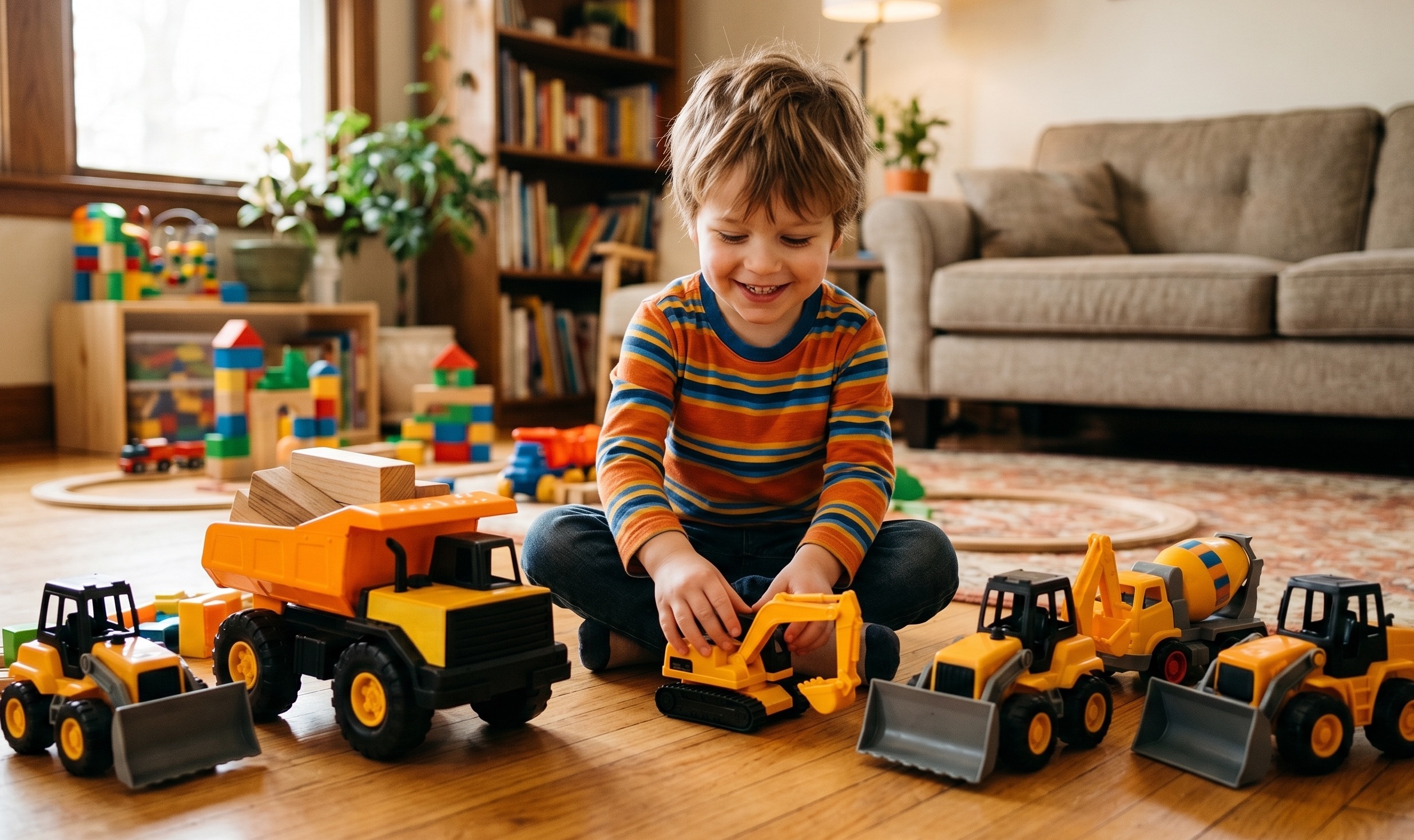
If you have a truck-obsessed toddler, you already know the signs. They recognize excavators from a hundred metres away. They stop at every construction site on a walk. They can tell a bulldozer from a road roller without hesitation, and they will tell you, repeatedly, loudly, and with full confidence.
This isn’t a phase to be managed. It’s a genuine interest worth encouraging creatively.
Why toddlers love construction trucks
Developmentally, large vehicles are fascinating to small children for obvious reasons: they’re enormous when you’re small, they have clear and satisfying functions, and they do things that even adults find impressive. Construction trucks in particular have a logical narrative: there’s a problem (digging a foundation, laying a road), and these machines solve it visibly, loudly, and dramatically.
That problem-solving structure is something toddlers can follow and find deeply satisfying, even if they can’t articulate why.
Feeding the obsession constructively
The easiest thing you can do is extend the interest into calm, creative activities. Coloring is a natural fit: it’s screen-free, builds fine motor skills, and lets kids engage with the vehicles they love through a different medium.
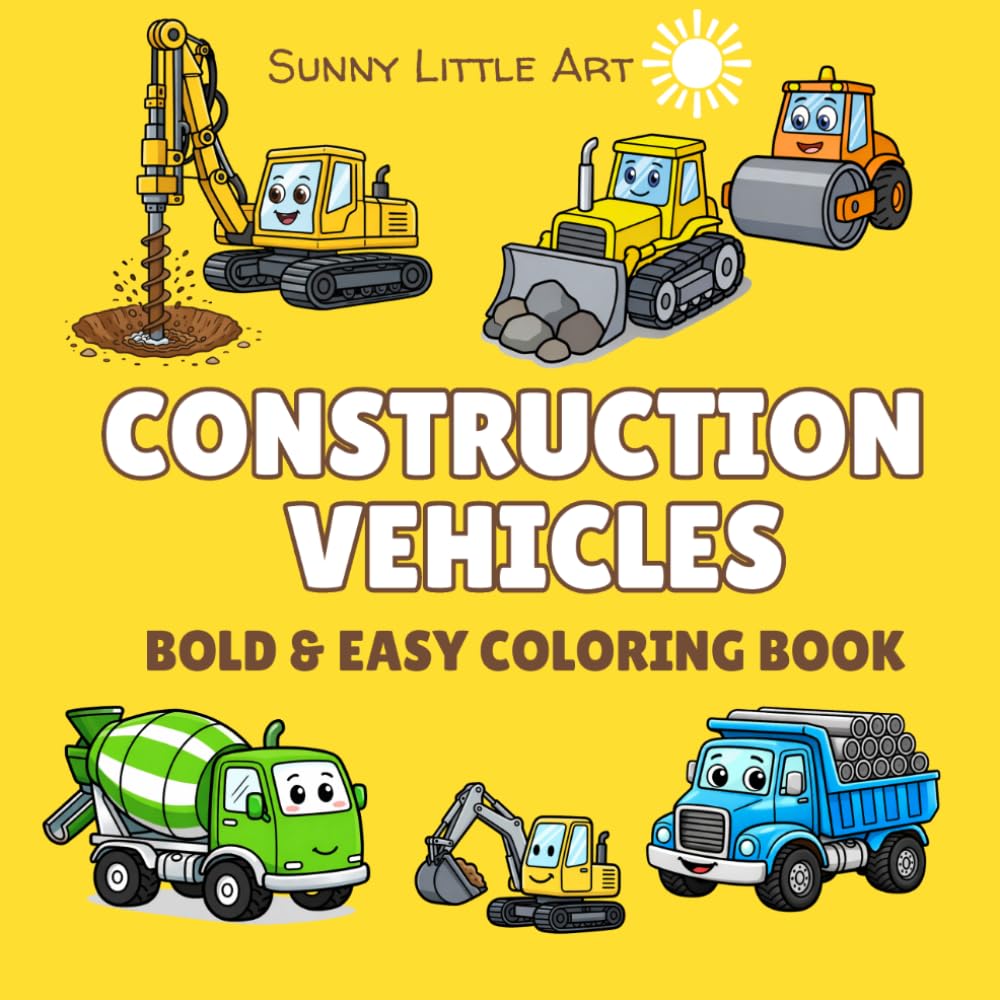
Construction Vehicles is our dedicated book for truck-obsessed kids. 45 pages, each featuring a different construction vehicle: excavators, bulldozers, cement mixers, dump trucks, road rollers, and more. Every vehicle has a cheerful face, thick outlines, and the bold simple style that makes coloring satisfying for kids ages 4–8.
Activities beyond the book
A few other ways to channel the fascination:
Construction site role play. A sandpit with toy vehicles is endlessly reusable and genuinely absorbing.
Counting games alongside coloring. “How many wheels does this truck have?” “Which is the biggest machine on this page?” Coloring sessions become something more interactive.
Watching real construction. If you walk past a site, stop for a few minutes. Naming the machines out loud (and letting your kid correct you when you’re wrong) is high-value time.
The interest in trucks isn’t arbitrary. It’s a window into spatial thinking, mechanical reasoning, and cause-and-effect learning. Worth taking seriously.